Your Ad Here

Sunday, May 30, 2010

Yamaha Xeon Technology

This motorcycle in Thailand named Mio 125. in Indonesia Named Xeon because this motorcycle was  not regenerate from  Mio.This Bikec is a brand new model and the engine was completely new. So, there is no common parts of the Mio on the Xeon machine. Let's see down inside it technology....


DiASil Cylinder
This technology is similar to Jupiter MX 135 and V-Ixion. The process of making a die casting (print), rather than layers. Because aluminum is mixed with silicon material which is very slippery. So the more minimal friction than ordinary cylinder.

The effect is, although in high rpm the risk of piston jamming is so very small. In addition, engine power also become more stable. Hence PT YMKI dared neither to five years for this component.

Forged Piston
The process of making a choice of several materials compacted (forging), then formed a piston. So that got tighter and stronger structure than casting process (printing). On the surface of tin plated piston wall which serves to minimize friction. When the machine has been working in along time, it will look shiny piston wall. Well, the shiny layer is the tin.

with the last dimension of the piston forging process can be designed more efficiently. So that the weight of the piston so more easily and less vibration when working. Most important, though not easy to expand work at high temperatures.


Liquid Cooled
Engine cooling system has been embraced like the Honda Vario radiator. Water jacketnya including cylinder heads and cylinder blocks. But in the cylinder block water jacket was only limited to the combustion chamber only. Because the heat from burning more concentrated there.

Now, with a water cooling system that makes Engine can set in the  higher compression. Ie up to 10.9: 1. Its effects, more big torque at lower speed. Therefore this motor fuel is recommended to use 91-octane gasoline unleadeed or at least equal Pertamax.

CVT Cooling System
In automatic bike, besides functioning as the engine driving also act as the rear arm. Consequently, when passing through the dusty or muddy roads, the engine so easy become dirty. Whereas in the engine, especially on the CVT, have a cooling system which is usually a box of filters.

Well, because the position of the filter boxes are generally made fused with the machine, so that its position adjacent to the street or low, making vulnerable dirty air sucked into the space CVT. As a result makes the CVT performance decrease because of slip and short age of components wearing. On the Xeon, its CVT cooling designed integrated with the framework. So that more clean air entering the CVT.

Wet Clutch Starter
Machine winding mechanism through the electric starter on the Xeon constrained model of 'wet' or submerged oil. Similar to the regular motor (non-matic). The advantage, starting the process so much smoother. Even YMKI claim softer than its competitors.

Throttle Position Sensor
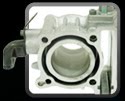
This brings model motorcycle carburetor vacuum, ie, use Mikuni BS26 (venturi diameter 26 mm). Equipped with automatic choke Ignition degrees regulators and sensors based on his throttle opening. Or fame called the throttle position sensor (TPS), like in Jupiter MX.

Multi Function Switch Main
These motors are equipped with ignition key or key magnet shutter key. To open the lock, was given a special button located on the left side of the keyhole. Not only that, to open the back seat was operated by the ignition key. 

Read More......

Suzuki Titan 115 Compare to Smash 110

What is the difference with the Suzuki Smash 115 Smash 110 Titan?
GM Sales PT Indomobil Suzuki Wheels-2 said that Titan is total new, both engine and model. In accordance with additional points behind, there is a difference in engine capacity. If Smash 110 cc, the Titan have 115 cc capacity.Actually, only increased by 3 cc fron smash capacity, or a 113 cc

With changes to the engine's performance, Titan  is slightly better than  Smash. In Thailand, this is called the New Smash Titans, while the old version with a machine called the Smash Revo 110.

Dimensions.
The dimensions doesn't have much change. However, Titan have
15 mm longer wheelbase. Nevertheless, according to data from PT SIS, it turns out the standard Titan 4 kg heavier than Smash. When using the casting wheel disc brakes, the weight increased 2 kg so the total weight of 102 kg.

Appearances.
A glimpse of the lights and the front hood is similar because of the format and placement of the headlights Sein lights on the front hood similar. However, the rear of the Titan round headlights, while Smash sharp angle. Sein position lights are also below. Design front sepatbor also different.

Instrument panel.
Titan 3D design consists of two parts, the speedometer and white-month basis, in no trip meters with a black base. Dental indicators, ranging from below, upward.

Exhaust and rear lights.
Encrusted chrome exhaust only. Titan plain without accentuation like Smash. The rear lights, although the same format in the middle of the red and white on the side, there is little difference in the corners of the lamp. Then, stirrup or holding back on Titan painted black.

Machine.
Additional capacity is done by changing the diameter and the step machine. Titan's engine is more upright position and the valve is longer. It is equipped with a throttle position switch (TPS), which is also used in the Shogun.

Titan Machinery, is a long type of stroke or stride. It can be seen with 51 mm diameter cylinder and measures 55.2 mm or 7.6 mm longer than Smash 110.

The result, engine power increased 0.1 PS, while torque is a significant increase, which is 1.7 Nm. This change was done so that more efficient fuel consumption.

Read More......

Tuesday, April 13, 2010

The Heart of the Motorcycle: Motorcycle Engines

All motorcycle engines, throughout history, fall under the category of "Heat Engines." The category derives its name from the power of heat creation and transfer to propel a vehicle.

In a four-stroke engine cycle there is the intake, compression, power, and exhaust. Each stroke corresponds to one full action of the piston. In a four-stroke cycle, or "Otto Cycle," two revolutions of the crankshaft are required to complete the process. In a two-stroke engine the cycle is completed within two piston strokes. Usually a two-stroke engine is usually more powerful than a four-stroke engine of equal size. However the drawback of a two-stroke engine is the amount of inefficient exhaust and pollution created from the unspent fuel that tends to leak through.

Heat Engines may also fall under the category of Internal Combustion engines. The first experiments of internal combustion engines were experimented by a Dutch scientist named Christian Huygens way back in 1680 A.D. Real headway was not made until almost two centuries later when around 1876, the right technology and brains were united and sustainable internal combustion motors were born and commercialized.

It not uncommon to hear conflicting advice on what type of oil should be used in a motorcycle engine. Manufacturers usually advise using synthetic, man-made oil, which has longer-lasting properties compared to natural oil. Indeed it will not wear as quickly and natural oil can retain viscosity easier. One thing is for certain, oil is still cheap enough to burn.

Automobile car oil is efficient in a motorcycle engine as well. Assuming it is proper viscosity and the motorcycle engine is well maintained. No matter which kind of oil is put into a motorcycle engine, the motorcycle is going to break it down much faster than a car would.

Most kinds of oil come with a rating of 20W-50 that tells you that it can maintain integrity at low and high temperatures. Heat will rapidly break down oil; a low rating would indicate the oil is unsuitable for elevated engine temperature. Synthetic oil has long-lasting polymer chains that resist breakdown better than natural oil polymers in elevated temperatures.

Some times a specific model of motorcycle will have a commonly diagnosed problem with its engine. Particularly the older motorcycles, such as the Kawasaki EX500 (which tends to pop out of gear when the brake is applied), retain problems characteristic to their engines.

If you are shopping for a used motorcycle one of the most important components you should check first is the engine. The seller may have warmed up the engine prior to you testing it, which would hide any problems it may have starting when cold. Therefore request that the seller not warm up the engine before you get there. You can see if the motorcycle engine cases are warm but be careful because they can get quite hot. There will be traces of heat for a few hours after an engine has been warmed. If you do detect traces of warmth, elect to explore other parts of the motorcycle while the engine cools. It's especially important to check the starting capabilities of a kick-start motorcycle engine while it's cold.

The sound of an unhealthy motorcycle engine is clacking or like that of gravel in a can. If there is a lot of hesitation or faltering as the engine starts, it could be issues with the carburetor. Unless you have a fuel-injected motorcycle in which case the problem may be much more complicated.

Issues with cable routing can be easily detected by fully turning the handle bars left and right while the bike is running on neutral. If the engine revs without you twisting the throttle, or twisting just a tiny bit, then there is a problem with how the motorcycle cables are routed.

When the engine has been off for a few minutes and the motorcycle is on even ground you can check the oil level. There should be a viewing glass or dip-stick on the right side of the motorcycle engine. The optimum oil level is between the upper lower edges of the glass or between the upper and lower ridges on the dip-stick. Too low is just as bad as the oil being too high. It is definitely a bad sign if you ask the owner when was the last time the oil was changed and he or she doesn't know. Every six months, or 5,000 miles, is a good rule of thumb for changing motorcycle oil. Also, make sure there's a fresh batch of oil in the engine right before the bike is stored during the winter.

What does the color of the oil mean?
Golden color: The oil has been changed very recently (fades to black with more use and time)
Black: The motorcycle oil is old-find out when it was last changed.
White Streaks: Water has gotten into the oil from condensation or worse, a leak in the coolant system. After 20-30 minutes of the engine running, the white streaks may be burned off. If this is the case then it was probably just condensation and there's nothing wrong. Otherwise major engine work is required.
Grey oil: Contains aluminum particles, which is alright for a dirt bike but dangerous in a street bike.
Shiny Flecks of Metal: Major disintegration of motorcycle engine. Sign of heavy wear.

Check coolant level to make sure it's not too high or low. The color of the motorcycle coolant should be a bright green, not murky or clear. Once that is taken care of you can have a mechanic do a compression test on the engine. It's not highly important to have done, unless there is blue smoke coming out of a hot motorcycle engine in which case you can look for another bike or take it to a professional.

Used motorcycles can be risky to purchase, especially if you don't know what to look for. By being diligent in research and quizzing the seller, you can get a good deal and feel secure with your own motorcycle.

http://www.easymotorcycle.com

Read More......

Tuesday, April 6, 2010

Kawasaki Edge Spec


No different than a moped, EDGE certainly have owned a typical performance of most mopeds, but that makes it special is, the concept of a different design and engine technology and reliability offered by Kawasaki increasingly making it superior to the product name alone already smelled.

From sports concept promoted , is obvious from the detail a slim and compact body full of sharp lines. Suitable for those of you who has crave body motor with aerodynamically contoured slim and fit heavy acceleration but still agile in. The combination of stylish designs futuristic sporty, attractive and luxurious and equipped with mufler trendy, inspired from the Kawasaki Ninja 250 makes it appear more cutting edge. Not only that, great power, KSAI technology and the use of fuel efficient yanglebih also a plus for EDGE from the ranks of competitors sebelumnya.EDGE product is specially made to appear different from that dare appear beda.Jika you're pondering the future want to buy a motorcycle, have the latest technology, and eco-friendly, EDGE is certainly his choice.


Engine type: 4 stroke, SOHC 2 Valves
Diameter x Stroke: 53.0 x 50.6 mm
Number & Fill Cylinders: 1 Cylinder & 112cc
Compression Comparison: 1: 9.5
Maximum power: 8:30 / 8000 RPM
Maximum torque: 8.13 Nm / 6500 RPM
Carburetor: Keihin PB 18 (Mark P064)
Starter System: Electric & Kick Starter
Total Transmission: 4 speed
Gigi transfer patterns: N-1-2-3-4-N
Type Final Reduction System: Chain Drive
Dental Ratio: to 1 = 3000 (36/12)
to 2 = 1938 (31/16)
to 3 = 1350 (27/20)
to 4 = 1087 (25/23)
Final Drive System Type: 2714 (38/14)
Oil Filtering System: Screen & Oil Filters
Overall drive ratio: 8.900 @ Top Gear
Ignition system: DC CDI
Lubrication System: Forced Lubrication
Oil Filtering System: Screen & Oil Filters
Lubricant Oil Capacity: 1.1 liters
Fuel Tank Capacity: 4.4 liters
Spark plug: NGK C6HSA
Lengthxwidthxheight: 1895mm x 700mm x 1045mm
Seat Height: 750mm
Axis Wheels distance: 1230mm
Lowest distance to the ground: 140mm
Maximum weight: 104 kg
Frame Type: Underbone, Turbular
Front Suspension: Fork Teleskopic
Rear Suspension: Swing Arm
Front Tire Size: 2.50 "- 17"
Rear Tire Size: 2.75 "-17"
Brakes Front: Disc Brake
Rear brakes: Drumbrake

Read More......

Waiting for Bison....


It's been some time since the rumors of yamaha Indonesia new product launch ie yamaha bison 160. However, until the endless march. yet no sign of its emergence.
There are sources who say to be launched in April, some are saying July. Regardless of the reason for delaying yamaha new products, we, as the consumers may, of course, speculate why it happen..

This delay may be due to research that still needs to be done because Bison is a product of Yamaha India, It may still need adjustments to design .. and ultimately to the price.
Yamaha may deliberately make consumers curious, as time will launch the V-Ixion.
or wait for rival Yamaha also weighed Honda launched its new product first, because the V-Ixion and Scorpio is still quite popular.
Honda also had time to blow their own gossip will issue several new products in 2010 was, wooow so they waiting for eachother...so when ..?!
Let's wait patiently ..... grrrrrrrrrrrrrrrrr

Read More......

Tuesday, December 29, 2009

Yamaha New Jupiter Z Indonesia 2010


PT Yamaha Motor Kencana Indonesia officially launched the New Yamaha Jupiter Z.

New Jupiter Z using a new machine with a smaller diameter and longer stroke. While the taillights is using several small bulbs, so similar to LED lights. In the headlamps, headlamp two stunning appearance with modern design.

Impression of sporty and dynamic look at the handlebar top cover that combines two colors, silver and black dove. Speedometer and gear indicator are separated and equipped with blue LED lighting. Other enhancements in the form of the model together with the ignition key and opening a safety seat that is now automatically opened from the front seat.

"Jupiter's new Z looks amazing, because it will be The Best Design Motorcycle, Moped in Indonesia," said Ir. Becky Dyonisius, vice president of PT Yamaha Motor Kencana Indonesia. Completing the image of the new Z toughness Jupiter, Yamaha took Moto GP racer Jorge Lorenzo from Fiat Yamaha team as the new icon.

from yamaha site here is the engine specs :

Engine : 4 stroke, 2 Valve SOHC, Air Cooled
Bore x stroke : 50,0 x 57,9 mm

Cylinder Volume : 113 cc
Cylinder : Single Cylinder
Compretion Ratio : 9,3 : 1
Max Power : 6,0 kW / 7.500 rpm
Max Torque : 8,3 Nm / 4.500 rpm
Lubrication : Wet
Engine
Oil : 800cc

Carburetor : (MIKUNI) VM17SH x 1

Transmision : ROTARY 4 Speed (N-1-2-3-4-N)
Clutch : Wet, Sentrifugal
Starter : Electric Starter & Kick Starter

Read More......

Friday, November 20, 2009

Yamaha Byson in Indonesia at 2010


The rumor says that Yamaha Indonesia will launch a new motor sport. It's called Byson (FZ160). Have the energy capacity of 153 cc.

Although still in the testing phase, it seems the motor will be able to rule the streets. Byson look similar with Yamaha FZ16. Very sporty and cool. With the lights under the handlebars and a big motor exhaust style, this bike have a taste of big Motor bike.

Together with V-Ixion, Byson presence will make a rival who also has a motor type is difficult to pursue sport. The price for this bike? Probably around 20 million. Yes, it's just a prediction. The reason there is no official price of the Yamaha.


Ok, in terms of FZ160 certainly looks more ferocious look. The reason is the base model used is the Yamaha FZ6 and FZ1 which is true streetfighter. And as usual here is the appearance of all things, as well as soap operas where the performance artist looks is more important than acting ability. Following advantages compared FZ 160 V-Ixion:

1. Rear tire size of 140 was recorded bigger than even Kawasaki Ninja 250R.
2. Bison FZ160 exhaust form that resembles YZF-R6 far more beautiful than the stock
V-Ixion exhaust's .
3. FZ160 large tank besides supporting performances are also supporting the comfortable
4. FZ160 headlamps have a more modern look rather than V-Ixion is still retro
5. Although FZ160 engine doesnt have radiator but looks full, while the V-Ixion seem like hollow.
6. In overall shape resembling a bull FZ160 more handsome than the V-Ixion conventional

So if Bison FZ160
released before theV-Ixion, the Vixion fate maynot as well as now. But that clearly should be released YMKI pleased this bike, considering the price which existed under Vixi at least not be able to increase sales of yamaha, but also capable of pounding the 125cc class bike like bajaj XCD 125, Thunder or Megapro. ..

Read More......

Friday, November 6, 2009

How to Clean the fuel Tank


Fuel tank could be leaking due to age and bad quality of the fuel. water could be mixed in fuel can cause corrosion and sediment deposits that cause fuel flow less smoothly.
To avoid the leak of fuel tank, it need to be cleaned.

The first step is to release the tank from the bike frame.
After that the remaining gasoline spilled or stored in containers or buckets that have been provided.
After all the gas is exhausted, then enter the mixed water and detergent or a pumice stone marbles. Why use marbles? The function of pumice marbles or earlier is to peel sludge and crust that is on the inside. Note that, the water was quite 1 / 3 the size of the tank.

After that drain the tank by opening and closing of the tap hole. If it still remained in the tap water before, then it can be aspirated using a small injection or commonly used for printer ink. Position dried them with holes facing down tanks. This drying process can take up to 4 hours to dry completely.

While waiting for the dry tank could also clean the faucet with a way to brush using an old toothbrush.
To ensure there is no more water can blow pressurized air into the top. If the hole faucet cold out there it means the remaining water. Do not ever try to dry it by wipe away with some cloth, because it could have cloth left and causing new deposits. also not recommended using a tissue or paper.
This process can be done once a year to improve the tank durable.


Read More......

Custom Chopper Engine Oil: Petroleum-Based Motorcycle Oil vs. Synthetic


If you want to get an argument started about motorcycle oil, just ask a group of custom chopper owners whether synthetic or petroleum-based oil is best for their engines and then ask why motorcycle oil costs so much more. You'll find some very, very strong opinions on these issues.


A while back, a Donny Petersen article appeared in American Iron magazine where he recommended synthetic oil for motorcycles. Harley-Davidson challenged his recommendations. ExxonMobil then provided information about synthetic motorcycle oil and the advantages of the synthetics.

There are clearly two strongly divided camps about this topic. For years, research results lauding the advantages of synthetics have been published. In fact, the Society of Automotive Engineers (SAE) has reported the benefits. Some of the benefits attributed to synthetic motorcycle oil products have been improved fuel economy, more power, less friction, better temperature control, increased engine life, less part failures and more. Sure, a car is not a custom chopper, but an engine is an engine - isn't it? Well, one significant difference between custom choppers and cars is that the chopper, at least in most cases, doesn't have a radiator and water coolant system to maintain engine temperature.

Most custom chopper power houses are cooled by the flow of air around the engine, dissipating the heat build up. The rear cylinder in a V-Twin engine will run hotter than the front cylinder as a result of this air cooling system. When the engine gets too hot, that is a bad thing. Yet, synthetic motorcycle oil producers and supporting research both indicate that synthetic oil helps keep the engine temperature down.

Another question that begs to be answered is: What is so different about motorcycle engine oils than automobile engine oils? Why do we pay double, triple or even more for motorcycle oil to put in our custom chopper engines that we pay for the engine oil we put in our cars? Whether petroleum-based or synthetic, this price difference is always there. Of course, after investing our money and time into building or buying just the perfect custom chopper, no one wants to use the wrong product and damage the engine of our well-loved sleds. But then, I don't want to damage the engine of my classic Dodge Charger, either. Having to do a rebuild on either engine is not something I plan for the immediate future. So, if the motorcycle oil manufacturers are telling me the truth that motorcycle oil is so different and so much better than automotive motor oil and that synthetic oil shouldn't be used in my motorcycle, perhaps I should be using the more expensive motorcycle oil in my cage, right?

Well, the bottom line is that custom choppers and cars are NOT the same and there are some differences in the oils that need to be considered. Let's look at these differences and then, you can determine for yourself whether to choose motorcycle-specific or automobile oil, petroleum-based or synthetic motorcycle oil in your custom chopper engine. Differences To Consider When Choosing Engine Oil Viscosity is one of the issues that are important when considering engine oil. But what, exactly, IS viscosity? According to John C. Woolum, PhD a Professor of Physics and motorcycle enthusiast who, in 1994, performed research on car vs. bike oils, defines viscosity as: "a measure of the friction between two layers of a liquid sliding relative to one another." Maintaining viscosity during the high operating temperatures and through the grueling transmission lubrication process is something that must occur to make an oil product effective for your chopper engine. Dr. Woolum that revealed that viscosity retention in automotive oils was frequently equal to, or even greater than, that for oil products labels as motorcycle oil. Other things that Dr. Woolum found during his research include the fact that synthetic oils experience a drop in viscosity more slowly than petroleum oils when used in the exact same ways. The largest drop in viscosity occurred during the first 800 miles or less of use. His research also indicated that motorcycles are, in fact, much harder on engine oil that automobiles. There was not a clear difference in his findings as to any ways that automobile oil was better than motorcycle oil, whether petroleum or synthetic. Friction modifiers are another issue. Cars benefit from friction modifiers. However, if you look at your custom chopper engine documentation, you will probably find a warning not to use any oil with graphite of molybdenum additives. This is because wet clutches clip when very low viscosity oil or oil with these additives is used. Read the label of any oil you put in your custom chopper and be sure it does not have these additives in large amounts. If your custom chopper engine handbook indicates that you should only use a specific oil, many are afraid that their warranty will be voided if they use any other product. The Magnusson-Moss Act says, simply put, that an original equipment manufacturer cannot base their warranty on making a consumer use an OEM part or fluid unless that part of fluid is provided to the consumer free of charge. So what's the real bottom line? The fact is that the choice is yours. There are very good automotive motor oils that some of my friends use in their custom choppers, while others wouldn't even THINK of putting something in their engines that didn't say clearly on the label that is was created specifically for motorcycles. Some of my friends are completely sold on the fact that synthetic motorcycle oil doesn't break down as quickly and wouldn't use anything else - in their motorcycles or their cars. Others choose to stick with the dinosaur oil. As long as you choose a top-of-the-line oil product that meets the specs for your engine, the choice is yours.

www.custom-choppers-guide.com/motorcycle-oil.html

Read More......

Thursday, August 6, 2009

Thunder EN 125, Not For Speed


well, said I want to have an muscle bike, with great power and nice looking. But for me, it seem almost impossible to have it. my country only allow big bike entry with special treatment that make the bike price become so high. it's unreachable for an ordinary employee like me. That bikes become a dream, poor me huh..?

With all my save, I can get one of the small capacities engine Suzuki EN 125. This bike called Thunder 125 in my country. I'm not a fanatic brand minded, so I pick this bike not because its Suzuki brand. I pick This bike because this bike is the most cheap sport bike... ha ha ha..

I'm a biker, go to my working place, and go to anywhere else, I ride my bike. With power in around 11 HP, I think it's enough to transport me to my working place and to my playing ground. I got many new brothers with my Suze (this is how i named my bike), and because of them, I begin to change my Suze look, just a little cosmetics to make it look different from original. I replace the double suspension to a mono shock, replace the rim to the wider one and give a wider "foot". I left The Engine virgin.

Most of my friend ask about it's perform with all the change, but i said, This bike is not for speed, so doesn't matter if my bike can not run fast.. cause I'm not a speed freak. above is my bike look.. this is my bike, so up to me.. hehehe


Read More......

Friday, July 31, 2009

Identify Engine Problem by Reading Spark Plug

A spark plug is an electrical device that fits into the cylinder head of some internal combustion engines and ignites compressed petrol by means of an electric spark. Spark plugs have an insulated center electrode which is connected by a heavily insulated wire to an ignition coil circuit on the outside, forming, with a grounded terminal on the base of the plug, a spark gap inside the cylinder.

As the electrons flow from the coil, a voltage difference develops between the center electrode and side electrode. No current can flow because the fuel and air in the gap is an insulator, but s the voltage rises further, it begins to change the structure of the gases between the electrodes. Once the voltage exceeds the dielectric strength of the gases, the gases become ionized. The ionized gas becomes a conductor and allow electrons to flow across the gap. Spark plugs usually require voltage in excess of 20,000 volts to 'fire' properly.

Because the spark plug is inside the engine and is the only easily removable part it can be used as an indicator to the state of tune and condition of the engine. The spark plug also says if you need to change anything in the mechanics. Below is some photos and descriptions (source Champion spark plugs) of what spark plugs can look like given certain engine conditions. Most of engine have been a combination of the normal picture and the carbon fouled around the threaded base. These pictures look like the very extreme of what can happen if problems are allowed to continue and I don't think some of the plugs would actually fire in the condition that they are shown.


Normal Spark plug


Carbon Fouled Spark Plug


Denotation Failed Spark Plug


Normal


Combustion
deposits are slight and not heavy enough to cause any detrimental
effect on engine performance. Note the brown to grayish tan color, and
minimal amount of electrode erosion which clearly indicates the plug is
in the correct heat range and has been operating in a "healthy" engine.


Carbon
Fouled


Soft, black, sooty
deposits easily
identify this plug condition. This is most often caused by an
over-rich, air/fuel mixture.

Check for a sticking choke, clogged air filter, or a carburetor problem
- float level high, defective needle or seat, etc.

This may also be attributed to weak ignition voltage, an inoperative
preheating system (carburetor intake air), or extremely low cylinder
compression.


Denotation
Failure


This
form of abnormal combustion has fractured the insulator core nose of
the plug. The explosion that occurs in this situation applies extreme
pressures on internal engine components. Prime causes include ignition
time advanced too far, lean air/fuel mixtures, and insufficient octane
rating of the petrol.


Oil Pouled Spark Plug


Spark Plug Mechanical Fault


Spark Plug Worn


Oil Fouled


Too
much oil is entering the combustion chamber. This is often caused by
piston rings or cylinder walls that are badly worn. Oil may also be
pulled into the chamber because of excessive clearance in the valve
stem guides.A build-up of crankcase pressure which can force oil and
oil vapors past the rings and valve guides into the combustion chamber
can also cause this.


Mechanical Damage


May
be caused by a foreign object that has accidentally entered the
combustion chamber. When this condition is discovered, check the other
cylinders to prevent a recurrence, since it is possible for a small
object to "travel" from one cylinder to another where a large degree of
valve overlap exists. This condition may also be due to improper reach
spark plugs that permit the piston to touch or collide with the firing
end.


Worn out Plug


This
plug has served its useful life and should be replaced. The voltage
required to fire the plug has approximately doubled and will continue
to increase with additional miles of travel. Even higher voltage
requirements, as much as 100% above normal, may occur when the engine
is quickly accelerated. Poor engine performance and a loss in fuel
economy are traits of a worn spark


Ash Fouled Spark Plug


Insulator Glazing


Spark Plug Gap


Ash Fouled Plug


A
build-up of combustion deposits stemming primarily from the burning of
oil and/or fuel additives during normal combustion, normally
non-conductive. When heavier deposits are allowed to accumulate over a
longer mileage period, they can "mask" the spark, resulting in a plug
misfire condition.


Insulator Glazing


Glazing
appears as a yellowish, varnish-like color. This condition indicates
that spark plug temperatures have risen suddenly during a hard, fast
acceleration period. As a result, normal combustion deposits do not
have an opportunity to "fluff-off" as they normally do. Instead, they
melt to form a conductive coating and misfire will occur.


No Spark Plug Gap


Rarely
occurs in car engines, however, this condition is caused by similar
conditions that produce splash fouling. Combustion deposits thrown
loose may lodge between the electrodes, causing a dead short and
misfire. Fluffy materials that accumulate on the side electrode may
melt to bridge the gap when the engine is suddenly put under a heavy
load.


Overheated Spark Plug


Splash Fouled Spark Plug


Pre Ignition Spark Plug


Overheated Spark
Plug


A
clean, white insulator firing tip and/or excessive electrode erosion
indicates this spark plug condition. This is often caused by over
advanced ignition, timing, poor engine cooling system efficiency, a
very lean air/fuel mixture, or a leaking intake manifold. When these
conditions prevail, even a plug of the correct heat range will overheat


Splash Fouled Plug


Appears
as "spotted" deposits on the firing tip of the insulator and often
occurs after a long delayed tune-up. By-products of combustion may
loosen suddenly when normal combustion temperatures are restored.
During hard acceleration these materials shed from the piston crown or
valve heads, and are thrown against the hot insulator surface.


Pre Ignition


Usually
one or a combination of several engine operating conditions are the
prime causes of pre-ignition. It may originate from glowing combustion
chamber deposits, hot spots in the combustion chamber due to poor
control of engine heat, cross-firing (electrical induction between
spark plug wires), or the plug heat range is too high for the engine or
its operating conditions.


Read More......

what should to do if we got motor bike accident


Motorcycle crashes are considered as the worst vehicle accident, since they frequently result in serious injuries or death. Since motorcycles can be driven at high speeds and afford their riders minimal protection, injuries are reported, by some estimates, in a staggering 98% of motorcycle accidents!

According to the National Highway Traffic Safety Administration, a motorcycle rider is 8 times more likely to be injured and 37 times more likely to die in a motorcycle accident than the occupant of a car in an automobile accident!

Just in the past decade, motorcycle accident deaths have not simply climbed steadily; they have actually doubled, in part due to the fact that more and more motorcycles are being purchased each year, not only by younger riders, but, increasingly, by riders over 40.

What Should You Do After a Motorcycle Accident?

  • Escape Immediate Danger: The scene of a motorcycle accident is a dangerous one, since nearly 62% of wrecks involve fuel leaks and spills. Therefore, your first step should be to distance yourself from any fire hazard.
  • Get Medical Care: If you are injured in the motorcycle crash, you should be taken to an emergency room for prompt medical care. Head and chest injuries are among the primary causes of death in motorcycle accidents, so you should undergo examination by doctors and obtain necessary diagnostic tests (like x-rays and MRIs) without delay.
  • Report the Accident: Unless you are transported from the scene by ambulance, call the police and report the motorcycle crash. A police report will document the facts of the wreck and will identify the parties involved, along with any witnesses. All too often, a motorcycle accident is blamed on the rider of the bike, which makes it critical that you protect yourself early on.
  • Call a Reputable Attorney: Contact a reputable motorcycle accident lawyer as soon as you possibly can. There is a great deal of investigation that must be done after a motorcycle crash, and it is best to start it before evidence and witnesses disappear. A knowledgeable motorcycle accident attorney will not only make sure your claim is competently handled from the outset, but will help you obtain the proper medical care that you need.


Investigating the Motorcycle Accident

In order to recover compensation for injuries sustained in a motorcycle accident, the law of negligence requires you to prove that the crash was the fault of another driver or entity.

A thorough investigation of a motorcycle accident is usually complicated, requiring the services of a capable motorcycle accident lawyer and his team of experts to establish driver fault or find an alternative cause for the motorcycle crash, such as a dangerous road condition or a vehicular defect.

  • Establishing Driver Fault. Statistics show that nearly 70% of motorcycle accidents involving multiple vehicles are caused by drivers who violate a motorcyclist's right of way. In fact, the failure of car drivers to see motorcyclists in traffic is a leading cause of motorcycle crashes. Failing to check blind spots, misjudging the speed of a motorcycle, and tailgaiting can often lead to motorcycle accidents.
  • Assessing Road Conditions. Studies repeatedly confirm that roadway conditions - undivided highways, curves, and defects (like potholes and pavement ridges) - are contributing factors in motorcycle crash injuries and fatalities. Motorcycles, being two-wheel vehicles, are less stable than full-sized cars and vulnerable on poorly maintained roads. Intersections, for example, have a high incidence of multi-vehicle motorcycle accidents, while many single-vehicle motorcycle accidents occur along curves and on undivided highways. Why? Is there a problem with the design or construction of these roadways? Are they furnished with appropriate signs? Do their traffic controls function properly? These are key questions for your motorcycle accident lawyer to answer in the course of a full investigation.
  • Inspecting Bikes and Safety Gear. Up to 3% of motorcycle accidents are caused by vehicle failure, necessitating prompt inspection of the bike by qualified experts. Similarly, the makers of safety gear must comply with applicable government standards to ensure a rider's safety in case of a motorcycle crash. For instance, all helmets have to meet Federal Motor Vehicle Safety Standard 218. In case of a head injury, then, a conscientious motorcycle accident attorney would engage the services of an expert to assess the helmet's performance in the crash by examining its style and weight, the thickness of its lining, and sturdiness of its chin strap and rivets.

While tracking down all responsible parties for a wreck, an astute motorcycle accident lawyer will make sure that no blame is assigned to the motorcyclist himself. Oftentimes, bikers are partly blamed for a motorcycle crash based on arguments that they were driving too fast or veering in and out of lanes in an unsafe manner. Comparative negligence on the part of the motorcycle rider may result in a reduction of damages! If the motorcyclist is found to be 10% at fault for the accident, then his recovery is reduced by 10%. If he is deemed 50% at fault, then his damages are cut in half! A vigilant motorcycle accident lawyer will protect his client's interests by making every effort to negate any comparative negligence arguments.


Maximizing Sources of Recovery for Motorcycle Accident Injuries

  • Drivers, Owners, and Employers. Drivers and owners of vehicles who cause a motorcycle accident are responsible for the injuries the wreck inflicts. But responsibility does not end there. If your motorcycle accident was caused by a driver who was on the job or driving a company car or truck, you would be able to pursue compensation not just against the driver, but his or her employer as well.
  • Governmental Entities. If defective design, construction, or maintenance of public roadways constitutes a dangerous condition, the governmental entity that exercises dominion and control over those roadways bears blame for your motorcycle accident. Claims against governmental entities, however, have strict filing deadlines, usually as short as six months. It is imperative that you consult a knowledgeable motorcycle accident lawyer right away, so as not to miss these deadlines and lose your claim rights.
  • Manufacturers. If bike failure due to defective motorcycle design, manufacture, or assembly contributed to the crash, the maker of the motorcycle would be a target defendant in your case. If a failure in safety gear, such as a helmet, exacerbated your injuries, then the item's makers and sellers would serve as further sources of recovery.


Pursuing Damages for Motorcycle Accident Injuries

Many motorcycle accidents tragically end in death. If someone you love has suffered fatal injuries in a motorcycle crash.

Studies have shown that the losses from motorcycle accidents can be 4 to 12 times higher than losses from other vehicular accidents. A skilled motorcycle accident lawyer, however, can help you recover:

  • Medical Bills. Serious injuries sustained in a motorcycle crash can trigger astronomical bills. For example, hospitalization at a trauma center for a head injury can costs upwards of $30,000 to $40,000! An experienced motorcycle accident attorney will help you recover the costs for any hospital stay, surgery, doctors' visits, diagnostic tests (like x-rays, MRIs, and CT scans), physical and rehabilitative therapy, and chiropractic care. You may further be entitled to the costs of future medical care, if your conditions will require ongoing treatment.
  • Pain and Suffering. A motorcycle accident may inflict a wide range of injuries, whether they be temporary (such as road rash), longer-term (such as broken bones), or disabling (such as a severed spine or trauma to the brain). The law allows for compensation for the pain and suffering associated with such motorcycle accident injuries, yet it does not provide a fixed formula to calculate that compensation. To recover the maximum amount that your injuries warrant, you will need the help of an expert motorcycle injury lawyer who is equipped with the knowledge and experience to best evaluate your claim.
  • Wage Loss. If your motorcycle accident injuries prevent you from working, then all your lost wages may be included in any claim for recovery. Even if you used sick leave or vacation time during the recovery period, reimbursement may be available. What if your injuries leave you permanently disabled and unable to work ever again? In conjunction with an economist, a well-qualified motorcycle accident lawyer can calculate your future losses and recover for your diminution in earning capacity.

Although punitive damages - that is, damages aimed at punishing a party at fault - are rare in motorcycle accident cases, they may be appropriate in certain instances, such as when a driver who caused the motorcycle crash was motivated by road rage or was driving while under the influence of alcohol.


Choosing the Right Motorcycle Accident Lawyer

To prevail in your motorcycle accident claim, you must choose the right motorcycle accident lawyer. A reputable motorcycle accident lawyer will

  • Investigate the motorcycle accident promptly and thoroughly;
  • Preserve evidence of the motorcycle crash before it is lost;
  • Locate witnesses to the motorcycle accident;
  • Obtain photographs of the motorcycle crash scene;
  • Establish the defendants' fault for the motorcycle accident;
  • Inspect the motorcycle and safety gear for potential defects;
  • Protect you from filing deadlines;
  • Sue all responsible parties;
  • Hire the right experts;
  • Recover your medical expenses and lost wages; and
  • Maximize your pain and suffering damages for your motorcycle accident injuries.


www.robertreeveslaw.com

Read More......

Friday, July 24, 2009

Yamaha XT250 2009 spec


Engine
Type249cc air-cooled, SOHC 4-stroke single
Bore x Stroke74.0 x 58.0mm
Compression Ratio9.5:1
Fuel Delivery33mm Vac
IgnitionCDI
Transmission5-speed w/manual clutch
Final DriveChain
Chassis
Suspension/Front35mm telescopic fork; 8.9-in travel
Suspension/RearSwingarm w/rebound-adjustable single shock; 7.1-in travel
Brakes/Front245mm disc
Brakes/Rear203mm disc
Tires/Front2.75-21
Tires/Rear120/80-18
Dimensions
Length84.6 in
Width31.7 in
Height45.7 in
Seat Height31.9 in
Wheelbase53.5 in
Ground Clearance11.2 in
Fuel Capacity2.6 gal (CA 2.4 gal)
Fuel Economy**73 mpg
Wet WeightN/A
Other
Warranty1 Year (Limited Factory Warranty)

Read More......
Your Ad Here